Utility partners
A cooperative load, planned early
A hub is a large, flexible, long-lived electrical customer. We would rather be in your planning process from the beginning than be a surprise interconnection request later.
Why Sentinel needs this partner
The role you would play
Utility capacity, timeline, and program design determine where hubs are possible and when they can open.
Feeder and transformer capacity is the single biggest constraint on corridor siting decisions.
Make-ready programs, tariffs, and managed-charging structures shape project economics.
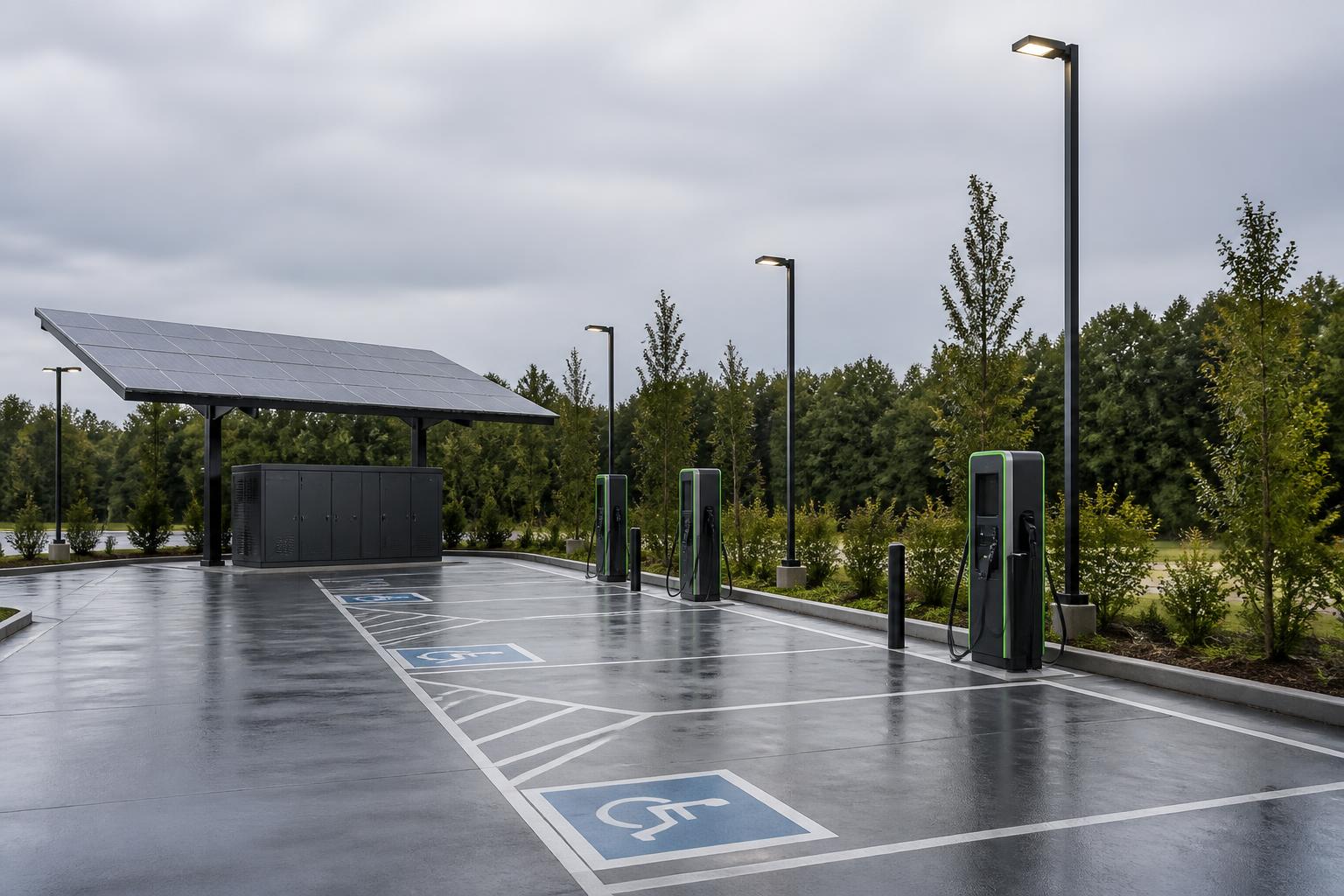
Storage, solar, and resiliency planning are far cheaper designed in than retrofitted.
What you may contribute
Your potential contribution
- Capacity data and guidance on corridors with existing headroom
- Interconnection process clarity and realistic timelines
- Make-ready program participation where the project qualifies
- Technical review of load profiles, storage, and solar plans
- Coordination on metering for multiple charging providers on one site
- Input on managed charging, demand response, and rate options
- Possible co-branding such as "Powered in partnership with…"
What Sentinel provides
What we bring to the table
- Early, transparent load forecasts by phase rather than all at once
- Willingness to shape load through storage, solar, and scheduling
- Sites planned for phased power growth with conduit and pad capacity
- Fleet and off-peak utilization opportunities on existing infrastructure
- A community-visible resiliency and electrification showcase
- A single development counterparty coordinating multiple charging providers
Potential deal structures
Ways this partnership could be structured
Illustrative structures only. Every arrangement would be negotiated site by site and documented in definitive agreements.
Make-ready participation
Utility performs or funds utility-side and eligible customer-side make-ready under existing programs, with Sentinel funding the balance.
Managed charging agreement
Load flexibility commitments in exchange for favorable scheduling, tariff treatment, or program incentives where available.
Storage and resiliency collaboration
Jointly specified storage supporting both site economics and local grid needs, potentially with program support.
Co-branded partnership
Utility recognition on site as an electrification and resiliency partner, without any transfer of ownership or control.
Technical scope
Ten conversations we want to have early
Early load planning
Bringing a multi-megawatt site into planning conversations years before energization, rather than arriving with a finished design and an urgent request.
Interconnection
Service application sequencing, metering configuration, and coordination between charging providers sharing one site.
Transformers and feeders
Identifying corridors with existing headroom, and where upgrades are needed, planning them in step with the utility's own capital cycle.
Make-ready infrastructure
Utility-side and customer-side make-ready scope, cost sharing, and program eligibility where such programs exist.
Demand management
Load shaping, managed charging, and scheduling so a hub behaves as a cooperative rather than a spiking load.
Battery storage
On-site storage for peak shaving, resiliency, and smoothing simultaneous high-power charging sessions.
Solar integration
Canopy generation sized to the site, with interconnection and export treatment handled per applicable tariff.
Resiliency
Islanding or backup capability considerations so a hub can serve as a community refuge during outages where feasible.
Fleet charging
Contracted off-peak fleet capacity that improves utilization of the same infrastructure.
Rate design
Working within existing tariffs and participating constructively in rate design conversations affecting public charging.
What the next step looks like
A clear, low-commitment path forward
- 01
Technical introduction
A briefing with electrification, planning, or key-accounts staff on the hub load profile and phasing.
- 02
Corridor capacity screening
Identify corridors and nodes where capacity already exists or is programmed.
- 03
Program eligibility review
Determine which make-ready, storage, or managed-charging programs a project might qualify for.
- 04
Preliminary service planning
Load letters, service configuration, and metering approach for a specific candidate site.
- 05
Coordination agreement
A non-binding memorandum framing collaboration through feasibility and design.
Partner interest
Start a utility conversation
Electrification, transportation electrification, key accounts, planning, and program teams are all welcome.
Utilities would participate as project partners, not automatically as owners of the site, the charging assets, or the development. No utility is a current partner, and no capacity, program funding, interconnection timeline, tariff treatment, or co-branding is committed or implied.