Chapter 01 — Arrival Experience
What a driver sees in the first twelve seconds
The decision to exit is made at highway speed. Arrival is engineered as architecture, landscape, and light — legible long before the off-ramp.
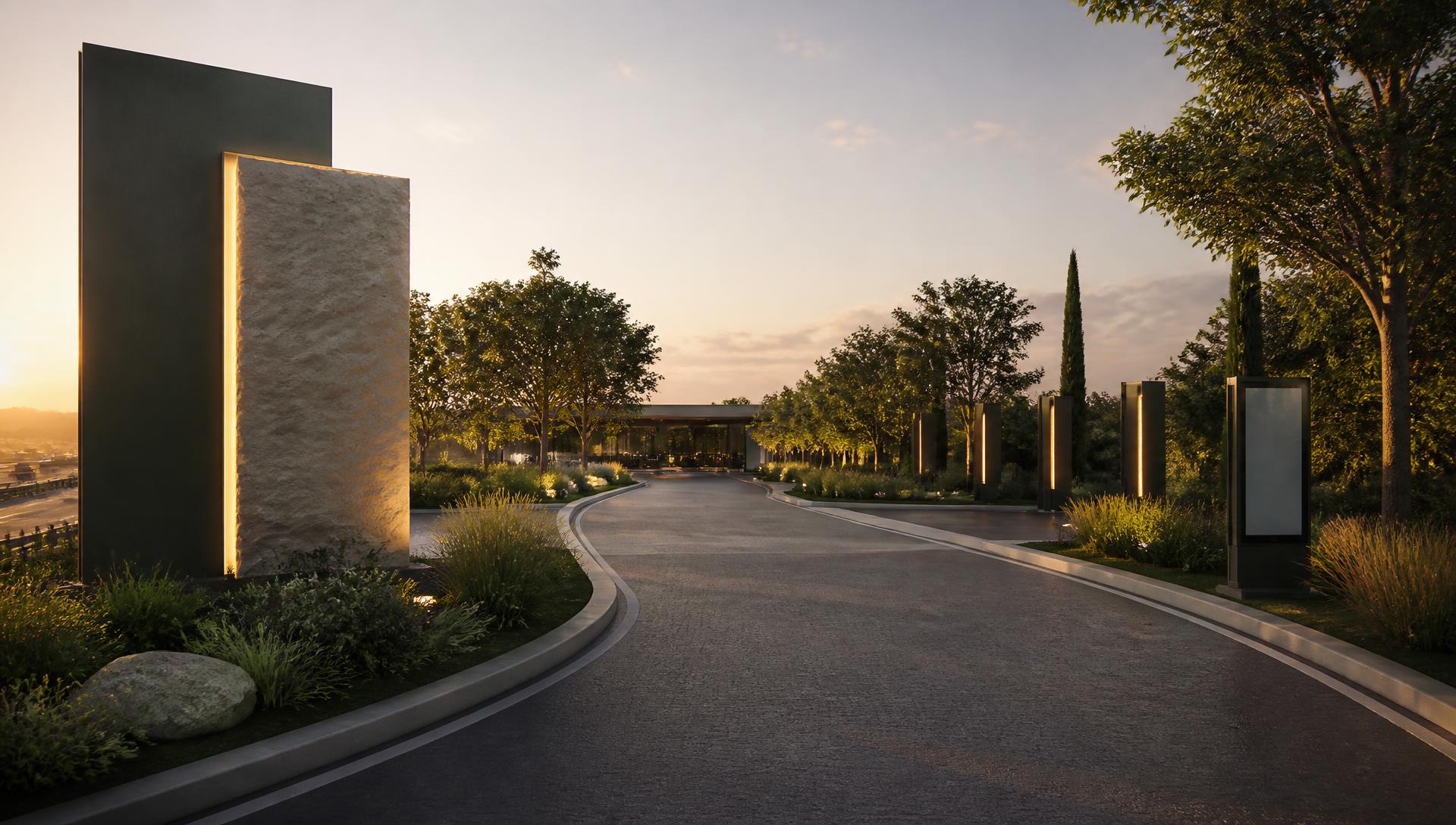
Entrance monument and wayfinding sequence — conceptual rendering
Most roadside stops announce themselves with a sixty-foot pole sign. A Sentinel hub announces itself the way a resort or a corporate campus does: with a landscaped threshold, a material change underfoot, and a monument that reads cleanly at 70 mph and again at 5 mph.
The approach separates decisions. Charging, food, rideshare, and service each get their own signal at their own point in the drive, so no driver is choosing between four things at one intersection.
Design intent
- Legible at highway speed, human-scaled at walking speed
- Landscape does the traffic calming, not signage
- Wayfinding designed for drivers who have never been here before
Elements
What this chapter is made of
Each element is a planning intent to be resolved through licensed design, engineering, and local review.
Entrance monument
Board-formed concrete and stone mass with a recessed illuminated reveal. Site identity, not advertising clutter.
Landscape threshold
An allee of canopy trees and native grasses that compresses the drive and slows arrival speed without a single sign telling anyone to slow down.
Digital information sign
Real-time stall availability by zone, dining hours, and event notices — placed before the decision point, not after it.
Wayfinding pylons
A consistent pylon family in charcoal and warm white, sized for vehicle, then pedestrian, then seated reading distance.
Lighting
Warm, downward, dark-sky-conscious lighting that makes the site feel safe and expensive rather than floodlit and industrial.
Decision separation
Charging, dining, rideshare, and service traffic are routed apart within the first two hundred feet of the entry drive.
Next step
Let's talk about the first hubs.
We are actively meeting with cities, utilities, landowners, charging networks, operators, and investors at the concept stage.