Chapter 09 — Night Experience
After dark is when the difference is obvious
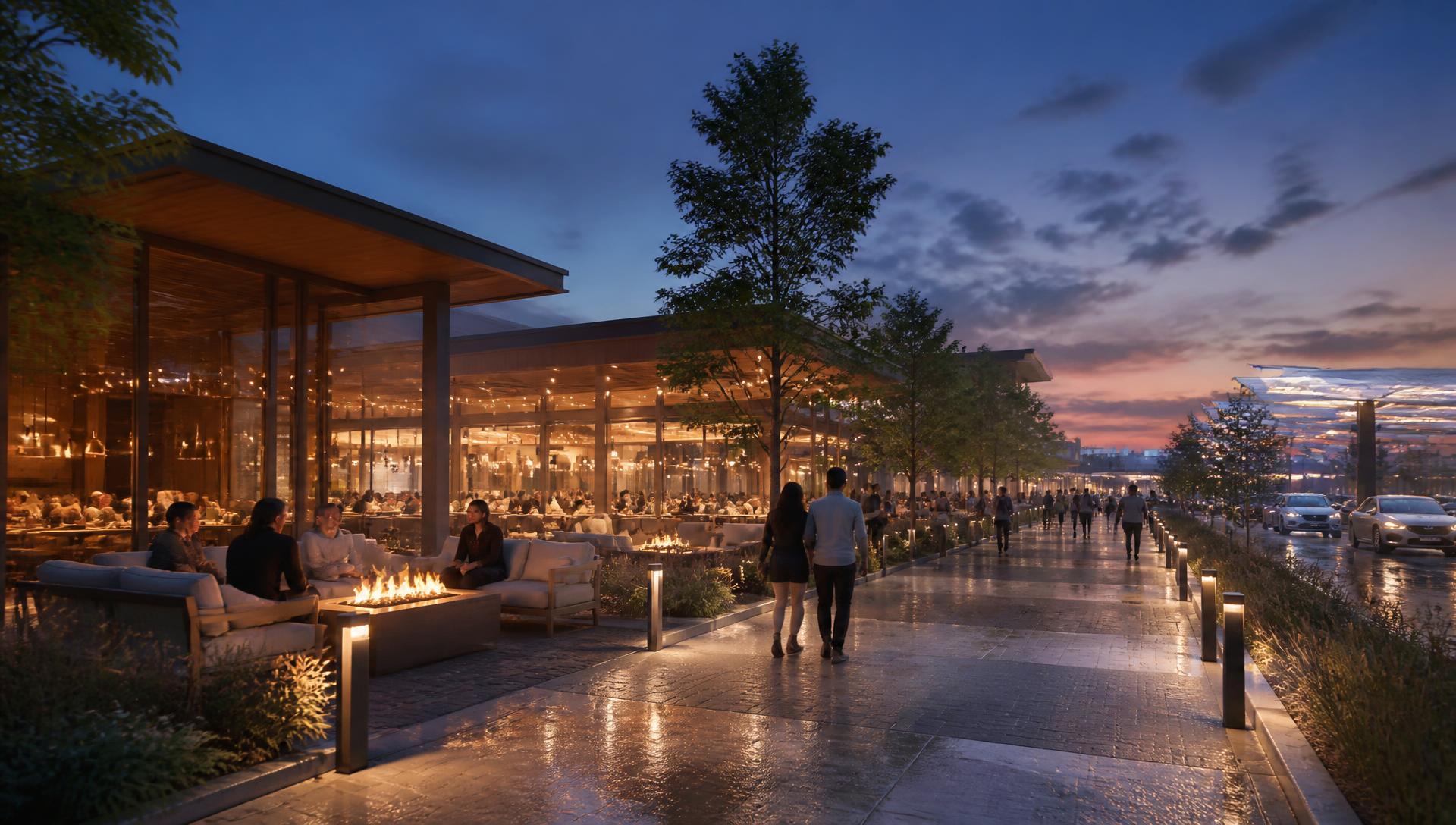
Warm light, fire, activity, and continuous sightlines — the hours when a conventional roadside stop feels worst are the hours this concept is built for.
The promenade after dark — conceptual rendering
Ask anyone who drives long distances with children what the hardest part is and the answer is the night stop. Bad light, empty lots, no clear place to stand, a restroom you would rather not use.
Night is treated here as a designed condition with its own lighting layers, its own activity program, and its own security posture — a place people choose to linger rather than hurry through.
Design intent
- The night condition is designed first, not inherited
- Lit, occupied, and legible from the highway
- Warm and shielded — bright without glare
Elements
What this chapter is made of
Each element is a planning intent to be resolved through licensed design, engineering, and local review.
Layered lighting
Bollards, pole lighting, façade grazing, catenary string, and landscape uplight working as one composition.
Fire elements
Gas fire tables in the lounge zones — the reason people stay an extra twenty minutes.
Illuminated canopies
Charging canopies lit from within so the perimeter reads bright and occupied from the highway.
Active edges
Late-hour food and coffee so the core is never a dark, empty plaza.
Uniform light levels
Even illumination that avoids the glare-and-shadow pattern that makes lots feel unsafe.
Dark-sky consideration
Shielded, warm-temperature fixtures that light the ground rather than the sky.
Next step
Let's talk about the first hubs.
We are actively meeting with cities, utilities, landowners, charging networks, operators, and investors at the concept stage.